How to Increase Organic Traffic in 2026
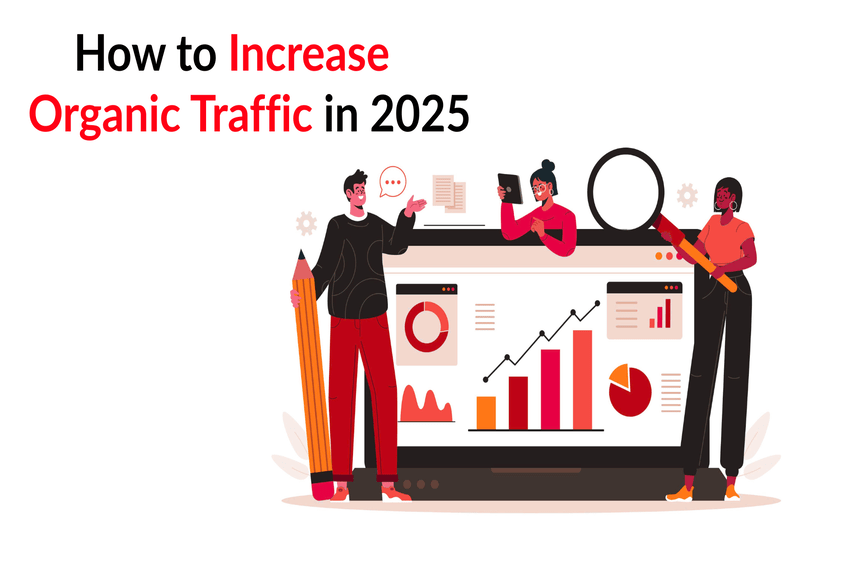
If ad spend keeps inching up while results feel flat, the fix isn’t another campaign—it’s durable visibility. The practical way to increase organic traffic in 2026 is simple in theory and disciplined in execution: answer real questions better than anyone else, keep your site fast and crawlable, and promote work that deserves attention. Do those three consistently, and you’ll boost organic traffic month after month without chasing every algorithm headline.
Why increasing organic traffic is critical for growth in 2026
Organic is the channel that keeps paying you back. A single well-built page can educate top-of-funnel readers today and still bring qualified visitors next year. It also lowers blended CAC, feeds email and social lists, and builds brand recall long before someone fills a form. With search results now mixing classic links, snippets, and AI-style summaries, showing up early—and repeatedly—creates steady demand you don’t have to buy every week.
Understanding Organic Traffic and Its Role in Long-Term SEO Success
Difference between organic and paid traffic
- Organic traffic: visitors who find you through non-paid results because your page best matches their intent. It keeps working as long as the content stays useful and discoverable.
- Paid traffic: visitors you acquire by bidding. It’s great for tests and bursts, but it stops the minute you spend.
Benefits of sustainable organic visibility
- Lower long-term cost (no per-click fees).
- Trust and authority (you teach before you sell).
- Coverage across the journey (definitions, how-tos, comparisons, pricing) inside one structured content system.
Key Steps to Boost Organic Traffic in 2026
Step 1 — Understand Your Audience, Keywords & Intent
Importance of audience/persona research
Start with what prospects actually ask. Talk to sales and support, scan chat logs, and collect the top 25 repeat questions. Write down the language people use—not internal jargon. Add pain points, desired outcomes, and buying triggers (e.g., “migration deadline,” “budget reset,” “new region launch”).
Mapping keywords to the customer journey & intent
Turn those questions into clusters. For each topic, check the SERP and label the dominant intent: learn (what/why), compare (x vs y), or act (pricing/demo/near me). Build one best page per intent so you avoid cannibalisation. Naturally work on your targets—how to increase organic traffic, boost organic traffic, increase organic search traffic, increase organic traffic to website, how to increase website traffic organically—only where they fit what the reader is trying to do.
Step 2 — Create High-Quality, SEO-Optimised Content
Building pillar pages & topic clusters
Set a pillar for each core theme (e.g., “Technical SEO for SaaS,” “Local SEO for Clinics”). Around it, publish focused pieces: checklists, industry comparisons, teardown case studies, and FAQs. Interlink both ways so users (and crawlers) see the structure.
Multimedia formats (video, infographics, resource centres)
- Short explainer videos near the top for “how-to” searches.
- Visual tables/diagrams for complex steps or tool choices.
- A resource centre with templates, calculators, and sample scripts—assets people bookmark and cite.
Updating/merging similar topics
Quarterly, review traffic and rankings. If two posts chase the same query, merge into the stronger URL, redirect the rest, and fix internal links. Refresh outdated screenshots, add 2026 steps, and note “Last updated” when changes are meaningful.
Step 3 — Improve On-Page SEO and Website Structure
Optimising titles, meta tags, headings
For On Page SEO, Promise the outcome and say who it’s for: “How to Increase Organic Traffic in 2026 (For B2B Teams).” Keep the primary phrase in the title and the intro, then let the content do the heavy lifting. Use H2s that mirror sub-questions so skimmers can land where they need.
Internal linking strategy and better navigation
- From each new post, link to the pillar and two tight follow-ups.
- Use descriptive anchors (“technical SEO checklist”) instead of “read more.”
- Surface “Related” content mid-article, not only at the end, to catch scanners.
Engagement metrics: time on page, scroll depth
Track engagement rate, average engagement time, and scroll events (25/50/75%). If a page draws impressions but has low time on page, fix the first screen: a stronger hook, a clearer summary, and a quick “what’s inside” box before the main content.
Step 4 — Strengthen Technical SEO Foundation
Core Web Vitals, mobile-first, HTTPS
- LCP: compress hero media, lazy-load below the fold, preconnect critical domains.
- CLS: reserve space for images, ads, and embeds; avoid layout jumps.
- INP: trim JS weight and long tasks; keep interactions under ~200ms.
Ship HTTPS across the site and keep desktop/mobile parity—what ranks is your mobile experience?
Crawl, indexation, sitemap, schema
- Make sure priority pages return 200 OK, aren’t blocked/noindexed, and sit within a shallow click depth.
- Maintain a clean XML sitemap (exclude thin/duplicate).
- Add structured data that fits (Organization, Article, HowTo, FAQ, Product, Breadcrumb). It’s clarity, not a cheat code.
Step 5 — Leverage Link Building, Brand Mentions & Amplification
High-quality backlinks, guest posts, brand citations
Skip low-quality swaps. Create assets people want to cite: original data, calculators, teardown benchmarks. Pitch them with one chart and two sharp insights. Contribute guest articles where your buyers actually read—real publications with editorial standards, not pay-to-post farms.
Use of social, email, and push to amplify content
- Announce new pillars to the segment that asked for them.
- Repurpose into threads/carousels and point back to the canonical page.
- Use push/in-app sparingly for flagship releases only.
- Low-effort wins: find unlinked brand mentions and request a tidy link; replace dead resources on relevant lists with your updated guide.
Step 6 — Optimise for Local, Voice & Emerging Search Modes
Location-based content, local listings
If geography matters, keep NAP (name, address, phone) consistent everywhere, complete your Google Business Profile, and ask for reviews with context (service used, outcome, timeframe). Create city/area pages that actually help—parking notes, typical turnaround times, local regulations—not just a keyword echo.
Conversational voice queries, AI/assistant search
Write concise answers for common questions, then add depth. Use question-style H2s followed by a two-sentence reply and a short step list when appropriate. Design tables and definitions that can be lifted into snippets or summaries, but make the full page the best “next click” with examples, templates, and screenshots.
Step 7 — Measure, Analyse, Continuously Improve & Refresh
Tracking with Google Analytics 4, Google Search Console
Two tabs you’ll live in:
- GA4 → Traffic Acquisition (which channels drive engaged sessions), Landing Pages (which URLs carry your goals), and Events (scrolls, clicks, site search).
- GSC → Performance (queries, CTR, position by page) and Pages/Experience (indexation + CWV).
Refreshing legacy content, repurposing formats
Every month, pull pages ranking in positions 8–15 with high impressions. Improve the intro, add missing subsections, and point 2–3 internal links from high-authority pages. Update legacy posts with current UI and policies. Repurpose a star guide into a 90-second video and a printable checklist; embed both in the original to lift engagement.
Step 8 — Advanced Growth Strategies for 2026 and Beyond
Using AI tools for SEO & personalization
Let AI tools for SEO help with clustering, outlines, and gap spotting; keep humans responsible for judgment, tone, and examples. On-site, personalise blocks (industry, company size, plan) without turning pages into script soup—performance still wins.
Multilingual, cross-border expansion
Use dedicated URLs and hreflang per language/region. Translate, then localise: currency, units, screenshots, holiday timing, compliance notes. Build links and citations in-market; don’t assume one language page will travel.
Zero-click optimisation (featured snippets, AI overviews)
Lead with clear definitions or steps when the query calls for it. Structure content so a snippet answers quickly while the full page offers depth (comparisons, calculators, case detail). That balance earns visibility and still drives the click.
Common Mistakes to Avoid When Increasing Organic Traffic
- Focusing only on traffic numbers, not intent
High sessions with low relevance won’t move the pipeline or revenue. Prioritise terms with a clear problem you solve. - Ignoring technical health and content freshness
Slow pages, dated screenshots, and blocked URLs quietly limit your ceiling. Fix what’s easy and visible first. - Neglecting user engagement and amplification channels
Publishing isn’t a promotion. Email your list, repurpose it to social, and pitch the assets built to earn links. - Over-reliance on a single tactic vs a holistic strategy
Links without content, or content without technicals, plateaus. Organic growth is a system; strengthen every link in the chain.
Conclusion
Here’s the simple loop that works in 2026: understand intent, publish the best answer, make the site fast and crawlable, then promote what deserves attention—and repeat. That’s how you increase organic traffic to website properties steadily, show up in snippets and summaries, and earn brand trust that compounds. Keep your roadmap lean, your measurement honest, and your refresh cadence regular, and you’ll boost organic traffic without chasing fads.
“Connect with Opositive’s SEO experts to boost your organic visibility.”
We’ll map the opportunity, fix what slows you down, and ship a 90-day plan your team can run with.
FAQs
How long does it take to increase organic traffic?
For most teams, you see early momentum in 8–16 weeks after shipping technical fixes and new content, with steadier gains as you refresh and expand clusters. Competitive spaces can take longer; page-2 to page-1 lifts are often your first proof.
What attracts visitors to a website?
Content that matches intent, fast pages, clean navigation, and trustworthy formatting (sources, screenshots, examples). Tools, templates, and short videos tend to earn saves and shares—both drive repeat visits.
Should older blogs be merged into one?
Yes, when they target the same query or fragment the topic. Keep the best material, publish under the stronger URL, 301 the rest, and update internal links so authority isn’t split.
What are the 3 C’s of SEO?
Content (useful, intent-matched), Code (technical health—CWV, mobile, HTTPS, schema), and Credibility (links, reviews, citations). If one is weak, growth stalls.
What is the fastest way of getting traffic?
There’s no instant switch for how to increase website traffic organically, but your quickest wins usually come from:
- Updating near-page-1 content with missing sections and better intros.
- Improving LCP/INP (compress images, defer non-critical scripts).
- Adding internal links from high-authority pages to your priority targets.