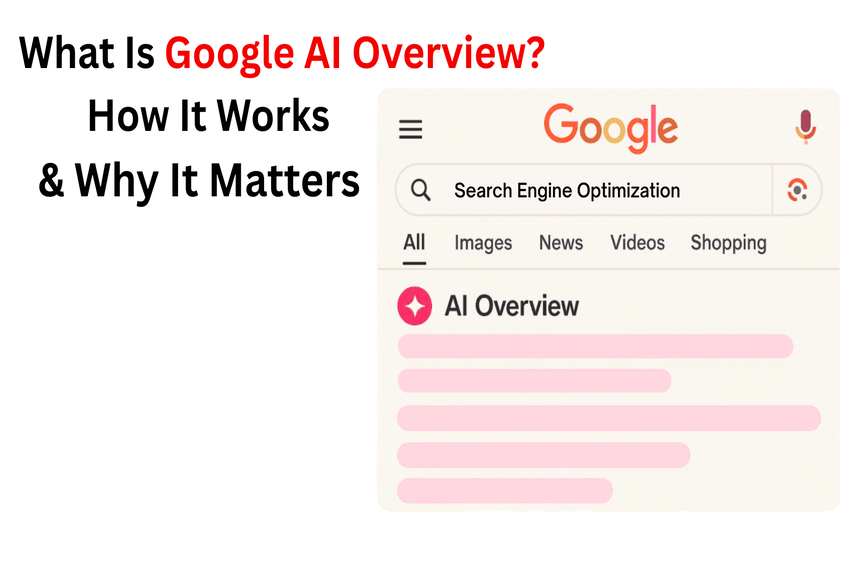
What Is Google AI Overview? How It Works & Why It Matters
 Make us preferred on Google
 It seems that technology is moving faster than we can comprehend, and Google is at the heart of that recent transition with its diverse new range of AI tools. When people discuss the Google AI overviews, they are actually referring to the various methods Google applies artificial intelligence to enhance our digital existence.
What is so appealing about Google’s AI is how seamlessly it operates in daily life. It breaks down complex queries, provides precise answers, and saves you more time by understanding what you actually need. Rather than trying to sift through pages of information, you frequently receive access to quick, relevant findings in the moment.
And that is why it is worth knowing what Google AI actually does and how it actually works. No longer just a buzzword, it is ingrained in the way we search, work, and organize. The more we know about it, the better we can harness these tools to make life easier.
What is the AI Overview of Google?
An AI overview of Google is a new feature from Google that provides more advanced summaries and insights from the company’s artificial intelligence to help users quickly and accurately understand information. Instead of going through numerous pages, clicking and following links, the analysis of Google AI overviews extracts relevant facts, analyzes them, and presents them in a single-line, easy-to-understand outline at the end of the Search results.
Why Google Introduced an AI Overview
AI Overview by Google is for fast, clear, and useful searching for the users. As the internet has made access to information easy, people usually waste more time browsing through multiple websites, searching for a simple answer. AI overview addresses this by extracting and featuring significant information from trusted sources and providing a straightforward summary directly in the search results. Google aims to be less confusing, more accurate, and to present search like a productive dialogue instead of a stack of hyperlinks.
Difference Between Google AI Overviews & Traditional Search Results
| Aspect | Google AI Overviews | Traditional Search Results |
| Type of Response | Gives quick, AI-generated summaries | Displays a list of websites that are related |
| Effort Required | Minimal effort; answers appear instantly | Having to click and open several pages to read |
| Presentation Style | Conversational and structured | Standard blue links with snippets |
| Speed of Understanding | Super fast; snapshot bullet points | Slower; users gather info manually |
| Depth of Information | Concise and simplified | More comprehensive and elaborated |
| User Experience | Focuses on convenience and clarity | Emphasizes variety and discovery |
How AI Overviews Fit Into Google’s SGE / Generative Search Initiative
In Google Search Generative Experience (SGE), AI overviews are one of the important features that make search more intelligent, more interactive, and more conversational. Rather than showing links, SGE utilizes generative AI to interpret the query intent and provide fuller, more useful answers. AI overviews complement this vision by providing rapid abstracts, explanations, and walkthroughs parsed from a wide context of trusted sources. They provide the “first impression” that users see before deep-diving into details.
How Google AI Overviews in Search Work
Google AI Overviews in search finds what you are looking for by analyzing the query, scouring trusted web sources about the topic, and summarizing them in plain English using generative AI. When you ask a question, Google identifies your query intent, extracts the most relevant information, and packages it into a brief answer, a how-to, or maybe a comparison. These overviews are presented at the top of search results, so you have a foundation to work from. The AI creates the summary, but offers links to the original sources so you can dig deeper into the topics at hand.
How Google’s LLMs Analyze Queries
Google parses queries using large language models (LLMs), assessing each one for intent, contextuality, and semantics. The models do not only focus on keywords; they rather analyse the search intent of the user, whether they are seeking to solve a problem, gain information about something, or make a decision. Drawing upon phrasing, tone of voice, and hidden context in heavy subtlety classes, the LLMs read the room and look for what you really want most out of the information. Before predicting the core answers, they validate against the web, and finally, structured and natural-to-read answer points are generated. With this, Google can go beyond just searching and provide you with more conversational and relevant answers.
How Information Is Selected & Verified for AI Overviews
Google still uses a methodical approach to determine which information is included in its AI Overviews.
As an initial step, its systems browse thousands of high-quality sources related to the user’s search term. Rather than taking a single website’s word for it, Google verifies facts appearing on multiple pages to point to reliable, consistent information.
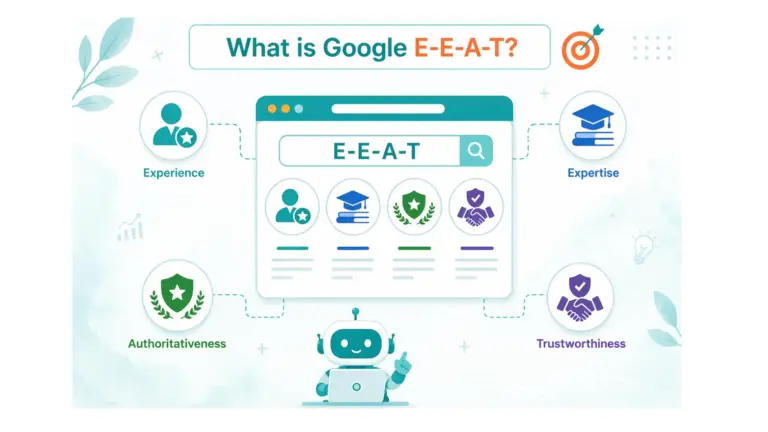
Then, Google determines which of those sources is more likely to be accurate by considering things like expertise, accuracy, and domain authority. Any content that does not fit into these categories is also excluded from consideration in the final summary. It also recognizes precision, security, and low-quality, wretched content, burying it with safety layers coupled with an advanced ranking signal.
Lastly, prior to displaying the AI overview, models run by Google make sure the summary is clear, contextual, and user-friendly. This step reduces mistakes and contrasts the information against previously validated information.
Why Some Queries Trigger Google AI Overviews & Others Don’t
The AI overview is not displayed on every search, but only when Google thinks that it can make an actual difference. For queries that seek explanations, how-tos, comparisons, or multi-layered information, this typically means an overview is created. On the flip side, the most basic or explicit queries, such as ones that include a brand, specific known fact, or navigational search, skip the AI layer entirely, as they don’t need to be summarized. In the same vein, Google will skip overview results for health or finance topics when it believes it cannot get these results to a high enough standard of quality and safety. This lowers the chances of overwhelming people and making it a more positive experience.
AI Overviews rely on different data sources to create their holistic responses:
Webpages
As we know, Google aggregates information from the best informational sites on the Internet. It looks for consistency between several pages to double-check. Written content provides context, storytelling, elaboration, and real-world context.
Structured Data
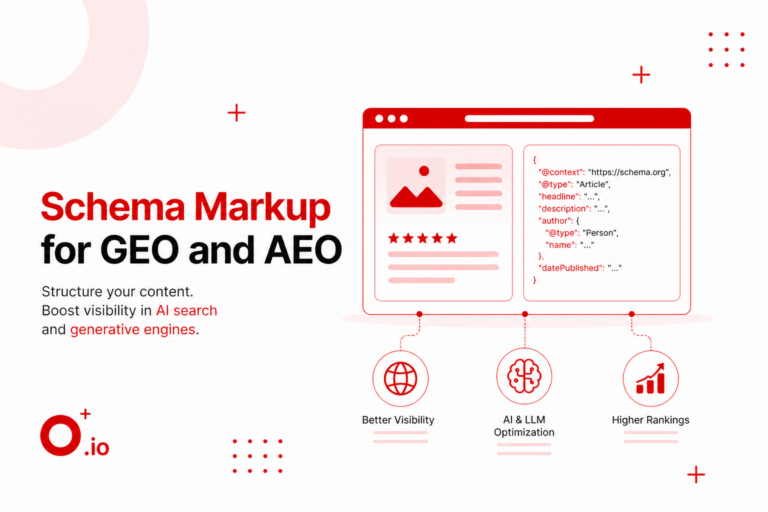
Information such as metadata, schema markup, product details, reviews, recipe data, medical disclaimers, and other structured data is provided by the website. AI uses structured data to acquire facts faster and without error.
Search Signals
Google also takes into consideration signals like page authority, user engagement, freshness, reliability, relevance, etc. These signals are used to ascertain the sources that should be given more importance in the summary generation process.
These elements combine to make AI overviews respond with human-like answers that are backed with sufficient research and information.
What Triggers Google AI Overviews in Search
The AI overviews are invoked when the query type is such that it contains a direct answer, when it is complex and when the user needs synthesised information. If a search is multi-faceted and needs quick interpretation or information retrieval, Google’s systems determine that an auto-generated synopsis provides a faster and clearer answer.
More specifically, queries such as how to do X, compare X and Y, explain X, or combine multiple facts tend to almost always cause the AI overview to appear. Conversely, clear searches, such as brand names, clear definitions, or navigational queries, typically do not require an overview since traditional results already accomplish this.
Signals such as user intent, the complexity of the query, the relevance of existing content, and the confidence of the AI model are used by Google to know when summarization will actually be useful.
Query Types That Commonly Produce AI Overviews
Searches that often trigger AI overviews include the following types:
Informational Queries
Questions that ask for more information about ideas, processes, and information.
How-to / Step-Based Queries
Anything that has specific steps, directions, or troubleshooting steps.
Comparative Queries
Comparison searches for products, methods, ideas, or choices.
Complex, Multi-Step Questions
Questions that involve reasoning, common sense, and multiple information retrieval.
User Intent Signals That Activate AI Overviews
The AI overviews displayed by Google do not just appear at random; they appear to help when Google determines that the system recognizes the user needs a “broader understanding” of a list of links. This is where those signals of user intent come in. These signals enable Google to decipher the true intent of the searcher behind the search query.
Google also considers the structure of the query. Question types like longer, multi-part questions, or queries that merge multiple ideas imply the user is seeking a summary answer, exactly what AI overviews are optimized to deliver.
Categories Where AI Overviews Are Limited (Sensitive/YMYL, medical, legal, etc.)
The Google AI Overviews’ goal is to provide a useful summary of many topics, but some categories have limited coverage to help ensure safety, accuracy, and reliability. Sensitive topics are areas that provide people with medical advice, legal advice, financial planning, and other types of important decisions that can profoundly affect a person’s health or wealth. Thus, AI-generated summaries may appear less often or be more conservative, ensuring accuracy, trust, and user safety in high-risk subject areas.
Why Google AI Overviews Matter for Users
AI overviews are important for users because they provide quick, context-rich answers that save them from browsing multiple search results. They also help users with a rapid understanding of intricate, multi-dimensional questions.
Faster, Context-Rich Answers
A Google AI overview provides users with a brief summary of the most relevant information from multiple resources. There is no paging scroll; instead, one gets rich insights instantly to the content we require. This helps save time and makes it easier to search for information, particularly about intricate topics.
Reduced Need for Traditional Click-Throughs
With AI overviews, users rarely have to click through to an individual page — they often find all they need on the search results page. That further reduces the procedural use of clicking different websites, and hence, faster and easier searches.
Better Understanding of Multi-Layered Questions
AI summaries abstract high-level responses for complex multi-step questions. The answer is one point at a time, and you unpack queries and write in a reasonable and orderly sequence.
Enhanced User Experience Through Summarized Insights
AI summaries enhance search results. Short summaries allow your users to quickly grasp what topics are about, compare something or decide without reading long articles.
H2: Why Google AI Overviews Matter for Businesses & Content Publishers
Across industries, AI overviews are reshaping how users find and engage with information, affecting discoverability, click-through rates, and perception of your brand. As the digital world continues to evolve, businesses too must evolve if they wish to remain relevant.
Shift in Organic Visibility Patterns
If an AI-generated summary changes the order of the content presented to users, then we have less traffic going to traditional web pages, and we start shifting traditional SEO in a whole new direction with ChatGPT SEO and AI in SEO.
Impact on Click-Through Rates Across Industries
The more answers offered in the AI overviews, the fewer clicks users do to the individual sites, which metrics are impacted differently through sectors (CTR, traffic patterns) and also what adds geo indexation optimization (the work you have to do to show for local searches).
How AI Overviews Influence User Trust & Brand Recall
AI summaries and overviews help boost perceived authority and credibility, building confidence with users, which improves brand recall versus competition.
Changing Role of Content Quality & Contextual Relevance
Search engines powered by AI want to summarize content for users, and to summarize effectively, they require well-sourced, authoritative content, which makes relevant, high-quality content a must-have.
Google AI Overviews vs. Featured Snippets
AI overviews present multi-source summaries which allow users to understand the information from a broader perspective, whereas featured snippets deliver succinct answers to users from a single webpage. This also manifests in differences in the content surface in the search query and other differences in the content consumption.
Key Differences in Visibility & Placement
AI summaries often rank at the top of search results, even above featured snippets, placing AI-synthesized answers above individual page snippets.
How AI Overviews Provide Multi-Source Answers
They aggregate reputable data sources into a content hub for their users.
Featured Snippets Are Single-Source — AI Overviews Are Multi-Perspective
Featured snippets extract one single answer from one page, while AI summaries compile from different sources to add depth and context.
When Google AI Overviews Do Not Show Up
AI overviews are not offered for all searches, with this feature being omitted for queries that may have potentially problematic answers, hyper-local queries, or obscure searches where the AI could be unreliable and the results potentially sensitive for users.
Sensitive Topics Limited by Google’s AI Safety Rules
It also observes restrictions on subject matter, such as medical, legal, or financial advice, as this form of content can spread incorrect information, and it also violates the online safety guidelines set by Google.
Queries With Clear Direct Answers (Calculator-style, factual look-ups)
For simple factual questions or calculations, answers tend to arrive within seconds, underscoring the need for an AI overview.
Local Intent Searches With Map Pack Priority
Local searches featuring local businesses or places take precedence over AI-generated summaries, in favor of map packs and local listings.
Low-Volume or Ambiguous Search Queries
Rare or ambiguous queries have limited data by definition, so we might not be able to successfully summarize them, or there may not be enough information to create an accurate summary.
Pros & Cons of Google AI Overviews
Quick, cross-source snapshots are convenient for users, but they present challenges for content publishers, and a hugely diverse user experience depending on what you search for and where in the world you are.
Major Advantages
- Summarized answers: Users are interested in information that is short and sweet.
- Multi-source factual grounding: This is grounded in multiple trustworthy sources of information, so it could present various perspectives on the same topic.
- Time-saving information flow: Fewer clicks to find an answer.
H3: Major Concerns
- Potential traffic decline for publishers: The growing range of topics available will lead to fewer people clicking on individual sites, potentially leading to decreased traffic.
- Accuracy restrictions: By summarizing, an AI can misrepresent information or oversimplify a lot of information.
- Experience varies by region & topic: Coverage may be less thorough in some regions or for some topics, leading to a varied experience.
- Changes to user click behavior: Users might depend on overviews, instead of actually checking the full content, which can dramatically change the metrics.
Real-World Examples of AI Overviews Google Shows
Available for many search types, Google AI overviews can assist users in understanding information, comparing features and options, or getting step-by-step instructions, all within a single search, without needing to navigate to many different sites.
Informational Query Example
AI overviews, based on short answers, include the facts you need to know about missional searches.
Product-Research Example
For product comparisons, AI overviews showcase many products, specs and their respective pros/cons from several sources, providing a swift, neutral view.
H3: How Google Summarises Multi-Step Queries
AI overviews offer a logical, step-by-step breakdown of complex or sequential tasks, usage tips, suggested itineraries, and budgeting advice from multiple references, all in one flow for easier planning.
AI Overviews & The Future of Search
AI overviews are transforming search in a conversational, contextually aware, and user-centric direction, shaping the next iteration of how we find and interact with information and the web.
Shift Toward Conversational Search Journeys
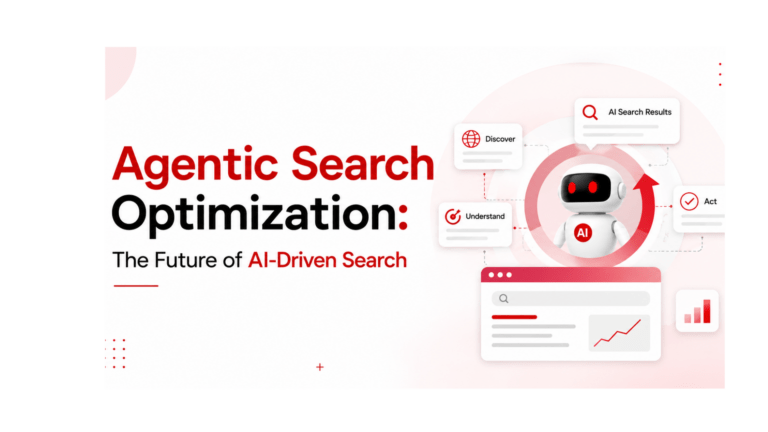
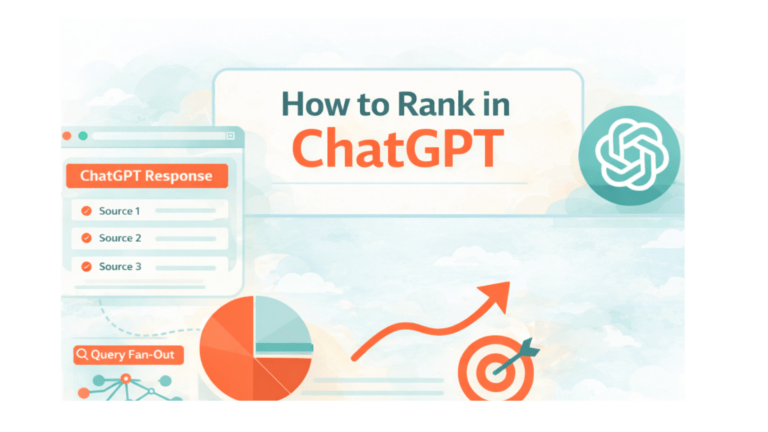
No longer are we asking Google a keyword-based query; instead, we are having an interactive chat-like experience where we can follow up with different questions and ultimately receive a dynamic multi-step answer. For this reason, learning how to rank in ChatGPT is becoming a necessity for users looking for conversational context-resonating answers, rather than search results.
The UI Changes Coming to SERPs
AI-Powered Search Engine Results Pages (SERPs) already are evolving away from our traditional link lists, with panels and summaries and far more interactive, synthesized insights.
AI-Powered Summaries Becoming a Default Experience
AI-written summaries may be the primary method people use to consume information, displacing individual websites and creating new patterns of content consumption.
Conclusion: Why Google AI Overviews Matter Today
Google AI overviews are intricately impacting user habits, brand impressions, and content interactions, and brands need to tune in and respond to the flow with appropriate changes that will be required. A brand that aims to stay visible, credible, and trusted by users must strive for early adoption and strategic alignment with AI-driven search.
How Opositive Helps You Stay Ahead
Opositive offers you AI SEO Services and gives you a glimpse into the future of AI search, what it means for you, how to think about winning content, and the right strategies to be optimized for that future. With our expertise and appropriate AI SEO tools, your brand will not only survive the rise of AI-driven search but thrive and stay on top of results and be a trusted voice in the competitive field, while more quickly making fact-based decisions and engaging better with your audience.
FAQs
Are AI overviews accurate?
Usually accurate! Because they aggregate information gleaned from multiple trusted websites, the information they present can be inaccurate or overly simplified; therefore, users should exercise caution when verifying critical information from one.
Is AI overview like ChatGPT?
Unlike ChatGPT, which provides free-form responses and is not necessarily bound to authoritative knowledge, AI overviews also use similar generative AI principles but focus on synthesizing and summarizing authoritative web content.
Is Google using AI in Search?
Yes, Google integrates AI in search. It marks sentences from across the web into summaries and answer boxes, along with content for multi-step queries.
Is AI overview available on all searches?
AI overviews are not ubiquitous. They are omitted for some sensitive issues, straightforward factual inquiries, local searches, infrequent or unclear searches.