How to combine SEO and CRO for measurable growth
You might see SEO and CRO as rivals fighting for marketing budget. Is it better to find more people or get more from the ones you already have? That's a false choice. Since organic search accounts for about 53% of trackable web traffic, you can't ignore the top of the funnel. But with landing page conversion rates often hovering near 2.35% for many sites, traffic alone isn't enough. These stats show that bringing in visitors matters, but traffic without a conversion path wastes money.
This guide breaks down that false choice. It explains what each area does, shows how they differ, and provides a plan to combine SEO and CRO. You'll build a growth engine that attracts the right people and converts a higher share of them.
What is SEO (Search engine optimization)?
SEO lets you find better visitors so you don't pay for every single click. When someone searches for a phrase, your site appears. It is a digital handshake that pulls in the right crowd at the precise moment they need help, which is better for growth.
Core components of SEO include.
- On-page work involves polishing content strategy or keyword targets while you adjust headings or meta data to fit what people need.
- Search engines look at off-page signals like backlinks and brand mentions to see if a site is a trusted source.
- Technical details like mobile layout or loading speed are key. If these are broken, search engines cannot crawl every page without hitting a wall.
Key SEO metrics to track.
- Tracking keyword rankings shows which phrases drive visibility for your specific pages.
- Organic traffic numbers reveal the volume of people arriving via search engines without clicking on an advertisement.
- Check the click through rate to see if headlines work.
- Domain authority scores are a yardstick.
What is CRO (Conversion rate optimization)?
Improving a site's conversion rate lets you squeeze extra value from current visitors. Look at specific data points to spot where potential buyers drop off. Once those friction points are fixed, growth follows. It works.
These tactics often produce results.
- Run A/B tests to compare page versions and see which earns more clicks.
- Use heatmaps because they visually show where visitors get stuck.
- Landing page optimization often involves shortening forms or fixing messy headlines.
- Making navigation menus easier to use does not hurt performance metrics.
Watch these metrics to measure success.
- The conversion rate tracks what percentage of people take a desired action.
- High bounce rates might mean content didn't match user expectations.
- Checking session duration helps you see if visitors find pages useful.
- Tracking revenue per visitor connects site tweaks to actual profit.
The key differences between SEO and CRO
You'd probably like a clear way to see how SEO and CRO differ side by side.
Think of it this way. SEO brings a crowd to your front door. CRO makes those people walk inside and buy something. Since you'll need both to succeed, this comparison table breaks down the main gaps.
| Dimension | SEO | CRO |
|---|---|---|
| Primary Goal | Acquisition by growing organic visits | Activation by boosting the visitor conversion rate |
| Key Metrics | Organic traffic, keyword rankings, CTR, and domain authority | Conversion rate, bounce rate, revenue per visitor, and order value |
| Focus Area | Technical structure, backlinks, and relevant content | Usability, testing, persuasion, and the user journey |
| Primary Target | Search engines first through signals for bots | Real people by removing friction and building trust |
Why SEO and CRO work better together
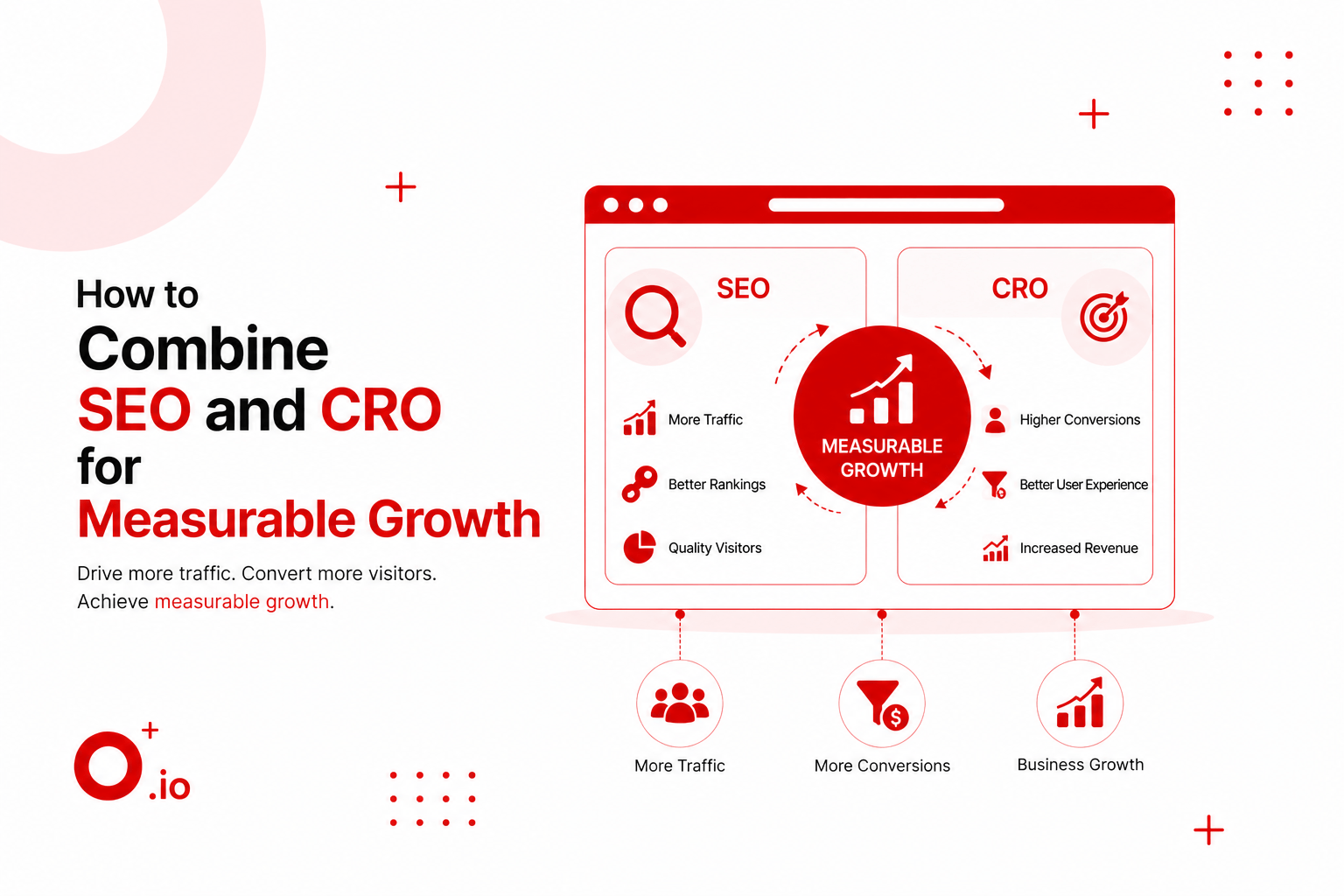
SEO and CRO do not compete. Think of them as two gears in the same machine. One grabs the attention, while the other secures the sale.
SEO draws in people looking for specific answers. CRO ensures they find what they need after they arrive. If search rankings are high but the website is a confusing mess, visitors leave. It is wasteful. A perfect checkout process does nothing if nobody sees it. Combining these efforts makes the site work better for everyone.
Why focus on both? Better user experience helps every metric. Fast pages keep people from leaving. This helps search rankings and makes buying easier. Use CRO insights for better organic titles.
Organic traffic makes testing more reliable. Because visitors arrive with a goal, the data comes from a real audience. You won't waste time on tiny tweaks for people who had no intention of buying.
How to integrate SEO and CRO with actionable strategies
Combining SEO and CRO often demands a shift in your daily workflow and overarching objectives. You can start using specific tactics today to bridge the gap between these two disciplines. By aligning various departments, these methods ensure your data results in more effective pages and increased revenue.
1. Use keyword intent to shape page design
- For users hunting for a tutorial or a guide, a deep blog post that answers their questions is usually the best approach.
- You could try offering content that validates your brand and makes booking a demo simple when people are comparing different options or checking reviews.
- If the person intends to buy something or sign up right away, the page must display clear prices next to a prominent button.
- Fast loading times and an obvious login link are key for navigational searches where someone's just trying to reach your brand.
Base your landing page CRO on the specific motivations you targeted through your search strategy. It is common for organic traffic to bounce when there's a disconnect between the initial click and what the user actually sees on the site. This strategy works well for websites dealing with high bounce rates.
2. Use CRO test results to refine on-page SEO
- Replacing stale meta titles with the highest-performing headlines from your A/B tests might help you see if organic clicks go up.
- When a specific value proposition resonates during a test, you should probably add that exact wording to your H1 tags and first few sentences.
- Figure out which formats, such as a checklist or a video, keep people on the page longer so you don't waste time on content that fails.
These small adjustments are usually cheap but can yield quick results.
3. Optimize landing pages for both bots and humans
- Every single page needs enough high-quality text to solve a problem while naturally weaving in phrases that relate to the core subject.
- Keep the path to a transaction simple by using one main button and a layout that doesn't distract the visitor.
- Avoid hiding text behind toggles or tabs because a search engine might not always read that data correctly.
- Technical markup like schema can provide search engines with better context without altering how the page looks to a human.
Striking this balance is often what separates a page-one ranking from a page-five result.
4. Unify your metrics and goals
- Try monitoring the conversion rate of your organic traffic on a page by page basis.
- Revenue per visitor is another useful metric to determine if the traffic you attract is actually worth the investment.
- You can verify lead quality by checking how many of those sign-ups actually become paying customers.
- Because some buyers take weeks to decide, it helps to track how search traffic influences sales over a longer period.
Work tends to move faster when teams share the same data. Search experts can focus on the most profitable pages while the conversion team knows where to prioritize the next experiment.
How AI is bringing SEO and CRO together
AI doesn't just work as a trendy term anymore.
It provides a kit for you to pull together data and speed up the loop between your search rankings and actual sales. Think about how you look at user behavior. Modern platforms can scan huge sets of data to find the exact spots where people leave your site. You'll see which pages need a new layout.
Using AI makes grouping keywords by intent much faster than before.
Instead of spending hours on spreadsheets, you can map out what searchers want and match it to a specific landing page. Predictive tools can tell you which A/B tests are likely to win before you start. This saves you money. You can also tailor the experience for different groups by using models to predict what offer they will like. It is a way to use the wide reach of SEO and the personal touch of CRO at the same time.
Content tools also help.
They let you make more pages that are ready for conversions. The meaning stays clear for search engines. You should still have a person edit the work and check the CRO details. You move from guessing to scaling what works. AI is not a way to replace a good strategy, but it makes doing the work at a large scale possible.
Conclusion
Choosing between SEO and CRO isn't necessary since they'll perform better as a pair. One's there to attract visitors. The other doesn't just sit there. It closes the sale. Results improve when these fields share data because that information helps user behavior inform both tactics equally.
A smart strategy makes the move from a Google search to a final purchase simple.
Start by matching search intent to your page categories. Testing organic landing pages can help you raise the organic CTR. Rank tasks by impact. Your path from search to checkout won't stay stagnant.
FAQs
1. How does CRO relate to SEO?
Think of CRO as the partner that takes your search traffic and turns it into real results. SEO gets the right people to the door, but the work of CRO begins only after they step inside. This process usually helps grow both the number of visitors and the total value from every person who clicks.
2. What is CRO in SEO?
Within a search strategy, this involves making specific tweaks to the pages where your organic visitors land. The goal is ensuring a bigger chunk of those people take the action you want. You might focus on sharpening headlines or making sure the page content matches what the person was looking for.
3. What are the 4 types of SEO?
Most experts point to four primary pillars. On-page SEO involves the content on the page and the underlying code. Off-page SEO is centered on building a reputation through links from other sites. Technical SEO ensures search engines can crawl and index your site without errors. Finally, you have local or mobile SEO which focuses on specific spots on a map or people clutching their phones. These different areas help search engines understand what you offer. A site might struggle to rank well in competitive search results if they don't work together.
4. Is SEO dead or evolving in 2026?
It is definitely going through a transition. Search optimization remains a major factor, but the focus is shifting toward pinpointing exactly what a user needs and providing high quality answers. New features such as AI summaries are changing how people interact with results. But the basic need for people to find your business online isn't going away anytime soon.
5. If I have traffic but no conversions, should I prioritize SEO or CRO?
Focusing your energy on CRO first is typically the best path to take. If you already have people visiting but they aren't buying anything, fixing the user path is usually much faster than trying to find more visitors. You should examine the reasons why people are coming to your pages. Once you're sure they are the right audience, test different ways to make their next step easier. It's much more efficient to turn current visitors into customers than it is to spend months trying to double your traffic from scratch.
6. Can poor CRO tactics negatively impact my SEO performance?
Yes, it happens more often than you might think. If you try to speed up a page by deleting helpful text or hiding content from your visitors, search engines might decide your page is too thin to rank. Sometimes people get a bit too aggressive with design choices and end up hurting their visibility because the page no longer gives search bots enough information to work with.
7. How can insights from A/B testing be used to improve an SEO strategy?
When you find a headline that performs well in a test, apply that same logic to your search engine listings. Updating your titles based on what people actually click on can lead to a boost in your organic traffic. These tests show you exactly what your audience likes and responds to. This knowledge helps you write better copy that keeps people on the page for a longer period.
8. What are some examples of shared KPIs for SEO and CRO teams?
You can track several metrics that are important to both sides. Conversion rates specifically for organic visitors is a great place to start your tracking. You might also look at how much money each organic visitor generates or the quality of the leads coming in from search engines. These data points help bridge the gap between being seen by a crowd and actually making a sale.

Mansi Jain
Senior AI SEO Specialist @ Opositive.io
GEO, AEO & LLM Optimization Specialist · 6.5+ yrs Technical SEO
About Mansi
Mansi Jain is a Senior SEO Specialist with 6.5+ years of experience in technical SEO, content strategy, ecommerce SEO, and AI-powered search optimization. At Opositive.io, she helps businesses improve their visibility across traditional search engines and emerging AI platforms through data-driven SEO strategies.
Her expertise includes technical audits, keyword research, schema implementation, content clustering, and AI SEO (GEO/AEO). Passionate about staying ahead of search trends, Mansi shares practical insights and actionable strategies that help marketers, founders, and businesses achieve sustainable organic growth.
“Practical, data-driven SEO that helps businesses grow sustainably across both traditional search and AI platforms.
Specialization
Technical SEO, Ecommerce SEO & AI SEO (GEO/AEO)
Education
B.Tech, Information Technology
College of Technology and Engineering, Udaipur · 2015 – 2019
Experience
Senior SEO Specialist, Opositive.io
3+ years at Opositive · 6.5+ years in SEO & AI-powered search
Skills
Technical audits, keyword research, schema, content clustering