AI SEO for eCommerce: A practical guide for D2C brands
AI shifted from experiment to default faster than most teams anticipated. During 2025, AI-sourced sessions across a sample of sites grew roughly 527% year over year. That jump signals something concrete: people are asking AI assistants for product answers, not just clicking through search results. (searchengineland.com)
Product discovery is changing because of this. Shoppers now ask AI for comparisons, recommendations, and direct answers. When an AI assistant recommends a product, it replaces what would have been a search-results click. Traditional eCommerce SEO, the keyword targets and link-building playbook, no longer cuts it alone.
This guide targets D2C and eCommerce brands that want to be the source AI assistants cite. It is practical, not theoretical. You will find the mindset shifts, the technical checklist, and the copy changes that make your product pages and content more likely to be recommended by AI-driven search.
Key takeaways
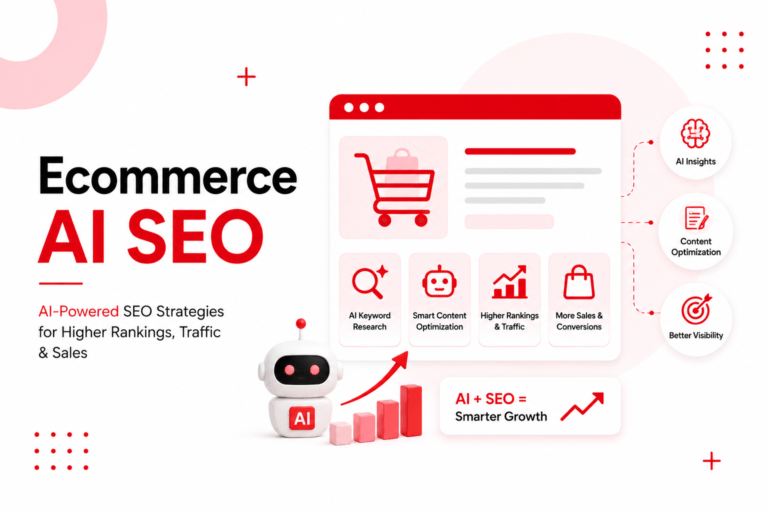
AI SEO for eCommerce means optimizing to be cited in generative answers, not just ranking for isolated keywords. The focus shifts to user intent and conversational queries.
AI Overviews and assistants create more zero-click searches and side-by-side comparisons. Sites not optimized for being cited lose organic clicks. (ahrefs.com)
Practical tactics include strong structured data, deep product content, visible E-E-A-T signals, and writing in natural language that matches how people ask questions. Avoid thin or duplicated product content, keyword stuffing, and blocking AI crawlers by default. Those mistakes make it harder for AI systems to trust and use your pages.
What does AI SEO mean for eCommerce?
AI SEO is the practice of optimizing an eCommerce site’s content and technical setup so generative AI search engines can find, understand, and recommend your products.
The shift from traditional SEO is real. Instead of targeting isolated keywords, you now target intent and conversational queries. Your goal is no longer just a spot on page one. You want to be the cited or recommended source inside an AI-generated answer.
Content focus changes too. Clear, structured, and experience-driven pages that answer real purchase questions perform better than keyword-optimized lists. The platforms that matter are Google AI Overviews, ChatGPT, Perplexity, and similar assistant-style interfaces.
| Area | Traditional SEO | AI SEO |
|---|---|---|
| Primary goal | Rank on page one | Be cited in a generated answer |
| Content focus | Keywords and headings | Intent, scenarios, and conversational language |
| Key signals | Links, on-page relevance | Structured data, trust signals, semantic depth |
How AI search is reshaping the way people discover products
AI changes the user journey in concrete ways. The customer funnel feels shorter. Answers are synthesized across sources. Discovery happens before anyone clicks through.
Zero-click searches are now more common. AI Overviews synthesize answers and may include product recommendations, so searchers get what they need without visiting a product page. This compresses the click path and raises the bar for being useful and citable.
Side-by-side comparisons live inside the search interface. Assistants generate direct comparisons for specific needs, which changes how shoppers evaluate products and reduces reliance on product detail pages as the first evaluation step.
Citation and consensus matter. AI models prefer sources that provide consistent, structured facts across multiple pages. Being one clear, authoritative voice increases the odds of being referenced.
A page ranked fifth in traditional search can still be the one the AI cites if it contains clearer, more structured answers. Rankings alone don’t guarantee visibility anymore.
Essential AI SEO strategies eCommerce brands need now
Treat AI SEO as a web of signals, not a single checkbox. Natural language content, strong structured data, visible E-E-A-T, robust product pages, and a clean technical foundation work together.
Structured data helps AI find facts. Conversational copy matches queries. E-E-A-T builds trust. Technical SEO makes everything accessible. Here are practical steps for each pillar.
Writing for natural language and how people actually search
AI prioritizes content that sounds like how people talk and ask questions. Write in full phrases and address real scenarios people care about.
Use search tools and “People Also Ask” sections to harvest conversational queries and long-tail prompts. Write scenario-led content like “best trail shoes for heavy rain” rather than specs alone. FAQs and Q&A sections on product pages capture direct question formats. Keep your tone helpful and straightforward so both engineers and customers understand the answer.
Setting up structured data so search engines understand your products
Schema markup tells AI exactly what your page contains. Think of it as a shared language.
Use Product, Offer, AggregateRating, and FAQ schema on relevant pages. Implement JSON-LD and include price, availability, SKU, and shipping details where applicable. Validate with Google’s Rich Results Test and monitor structured data errors in Search Console. (developers.google.com)
Correct schema cuts ambiguity about product facts. AI systems often pull those facts into concise recommendations.
Build expertise and authority to earn trust
AI models prefer sources that look trustworthy. Show your experience clearly and consistently.
Add author bios for long-form content and display real staff credentials where relevant. Surface user-generated content like detailed reviews and photos. Those are credibility signals. Make policies visible: shipping, returns, warranty, and privacy pages all matter for trust. Publish thorough how-to guides and product use-case articles that demonstrate domain experience. (developers.google.com)
Write detailed, valuable product content
Thin descriptions are invisible to AI. Flesh out product pages with useful detail that answers actual questions.
Describe features, benefits, and specific use cases in clear sections. Include visuals like 360-degree views, videos, and annotated images. Use headings such as Features, Specifications, and Care Instructions to structure content for both humans and AI. Add comparisons, sizing guides, and compatibility notes that answer common buying questions.
Get your technical foundation right
If AI cannot reach or parse your page, nothing else matters. Mobile-first design and fast page speed count. Measure page speed with Core Web Vitals and aim to improve continuously.
Keep a logical site architecture and an up-to-date sitemap so crawlers discover pages. Monitor crawl errors in Search Console and ensure important pages are not blocked. Be deliberate about AI crawlers. Do not block GPTBot and other well-known bots without a clear reason, because they discover and surface your content in AI interfaces. OpenAI documents the crawlers and how webmasters can control access. (developers.openai.com)
How to make product pages work with AI recommendations
Product detail pages are primary sources for AI recommendations. Treat every element on the page as a signal the AI can read and reuse.
Make each product page a compact, authoritative answer to a shopper’s question. Then layer the technical signals so the AI can extract facts reliably.
Product descriptions that speak to AI systems
Use semantic richness by including synonyms and related terms so AI understands the product’s meaning and context. Answer implicit shopper questions: Who is this for? When should you use it? How does it compare to alternatives?
Break descriptions into clear sections like Features, Specifications, and Care Instructions so AI can pull concise facts without ambiguity.
Use quality images and customer content
Write descriptive alt text that explains what each image shows and its use case. Encourage reviews that mention performance, sizing, and real-world conditions. Those specifics are highly citable.
Add a customer Q&A section to capture long-tail, conversational queries directly on the page.
Common mistakes in eCommerce AI SEO
Avoiding pitfalls is as important as adding new signals.
Ignoring structured data means AI has to guess facts about price, availability, and ratings. Thin or duplicate product content makes you invisible to generative systems that prefer unique, experience-driven content. Focusing only on keyword rankings misses the point. AI cares about answers and context, not keyword density.
Keyword stuffing makes content worse, not better. Trying to trick AI with repeated phrases backfires. Neglecting E-E-A-T signals costs you trust. If those elements are missing, AI is less likely to cite your pages. (developers.google.com)
How Opositive.io uses AI SEO to accelerate growth
AI SEO is not a checklist. It is a systems problem that blends content, schema, and technical rigor.
We start with an AI readiness audit. We look for gaps in structured data, thin or duplicated product content, crawlability issues, and weak trust signals. From there we build a program that centers on topical authority rather than single-page tweaks.
Advanced schema strategies map product attributes to AI-friendly fields. Content clusters turn product pages into citable sources. Ongoing measurement tracks visibility within AI Overviews and assistant responses. The aim is measurable business outcomes: not just more sessions, but higher-quality traffic and conversions from people who arrived via AI-powered discovery.
The future of AI and eCommerce: what is GEO?
Generative Engine Optimization, or GEO, is the next evolution of SEO focused on optimizing for AI-powered answer engines.
Topic targeting replaces narrow keyword chasing. The goal is to get cited or mentioned in a generated answer, which often means owning a question space with multiple supporting pages and data points. Several trends are emerging:
Brand mentions and citations will grow in importance because AI models surface trusted voices and consensus. Personalization will increase as AI tailors recommendations to context, so structured user signals and personalization-friendly content will matter more. Cross-platform measurement becomes essential. You will need tools to track visibility across different AI assistants and their citation behaviors.
Automated monitoring and content workflows will scale up. AI will surface content gaps, draft outlines, and validate schema. Preparing for GEO now means investing in E-E-A-T, detailed structured data, and content that is genuinely citable and useful.
Conclusion
AI is changing how people find and buy products online. Search that used to send traffic to product pages is often replaced by assistant-style answers. That requires a shift in how eCommerce brands think about visibility.
Focus on clear, useful product content, strong structured data, and transparent trust signals. You will have a real advantage.
Start by auditing your product pages and schema. Treat AI SEO as a long-term program. Build authority, not shortcuts, and you will be the source AI chooses to cite.
Take control of your visibility in the new era of search.
FAQs
1. How to use AI in eCommerce SEO?
Use AI as a research and scaling tool: extract conversational queries, draft first-pass product descriptions and FAQs, and analyze review text for common user phrases. Always edit AI drafts for accuracy, brand voice, and specificity. AI is a force multiplier, not a replacement for domain knowledge.
2. Will AI SEO completely replace traditional SEO practices?
No. Traditional SEO fundamentals still matter: crawlability, site speed, architecture, and backlinks. What changes is the emphasis. AI SEO adds a new layer focused on being a trusted, citable answer source.
3. How does schema markup help AI understand product availability and price?
Schema provides explicit fields for price, availability, currency, and offers. When implemented correctly, AI systems extract those fields reliably instead of guessing from free text. That improves the accuracy of recommendations.
4. Why is E-E-A-T important for AI search if it is not a direct ranking factor?
E-E-A-T is a set of quality signals that help AI and search systems decide which sources are trustworthy. Even if it is not a single ranking metric, E-E-A-T influences how algorithms and human raters assess content quality and reliability.
5. Should I block crawlers like GPTBot in my website’s robots.txt file?
Not by default. Blocking GPTBot and similar crawlers prevents your content from being discovered by AI interfaces that might recommend it. Only block bots if you have strong reasons, like licensing concerns or private content. OpenAI publishes guidance on how to control crawler access. (developers.openai.com)
6. What is the difference between AI SEO and Generative Engine Optimization (GEO)?
AI SEO describes the broader set of tactics that make content discoverable and useful to AI systems. GEO is a narrower, forward-looking practice focused specifically on optimizing to be cited by generative answer engines. GEO emphasizes topic ownership, citation-ready content, and cross-assistant measurement.

Mansi Jain
Senior AI SEO Specialist @ Opositive.io
GEO, AEO & LLM Optimization Specialist · 6.5+ yrs Technical SEO
About Mansi
Mansi Jain is a Senior SEO Specialist with 6.5+ years of experience in technical SEO, content strategy, ecommerce SEO, and AI-powered search optimization. At Opositive.io, she helps businesses improve their visibility across traditional search engines and emerging AI platforms through data-driven SEO strategies.
Her expertise includes technical audits, keyword research, schema implementation, content clustering, and AI SEO (GEO/AEO). Passionate about staying ahead of search trends, Mansi shares practical insights and actionable strategies that help marketers, founders, and businesses achieve sustainable organic growth.
“Practical, data-driven SEO that helps businesses grow sustainably across both traditional search and AI platforms.
Specialization
Technical SEO, Ecommerce SEO & AI SEO (GEO/AEO)
Education
B.Tech, Information Technology
College of Technology and Engineering, Udaipur · 2015 – 2019
Experience
Senior SEO Specialist, Opositive.io
3+ years at Opositive · 6.5+ years in SEO & AI-powered search
Skills
Technical audits, keyword research, schema, content clustering