How to rank in Perplexity and get cited in AI answers
Search is changing. The familiar page-one race for blue links is giving way to conversational answer engines like Perplexity AI that return a single, sourced answer instead of ten links. For brands that have relied on position-based SEO, that shift matters. Visibility now means being cited inside the answer, not simply outranking competitors on a results page.
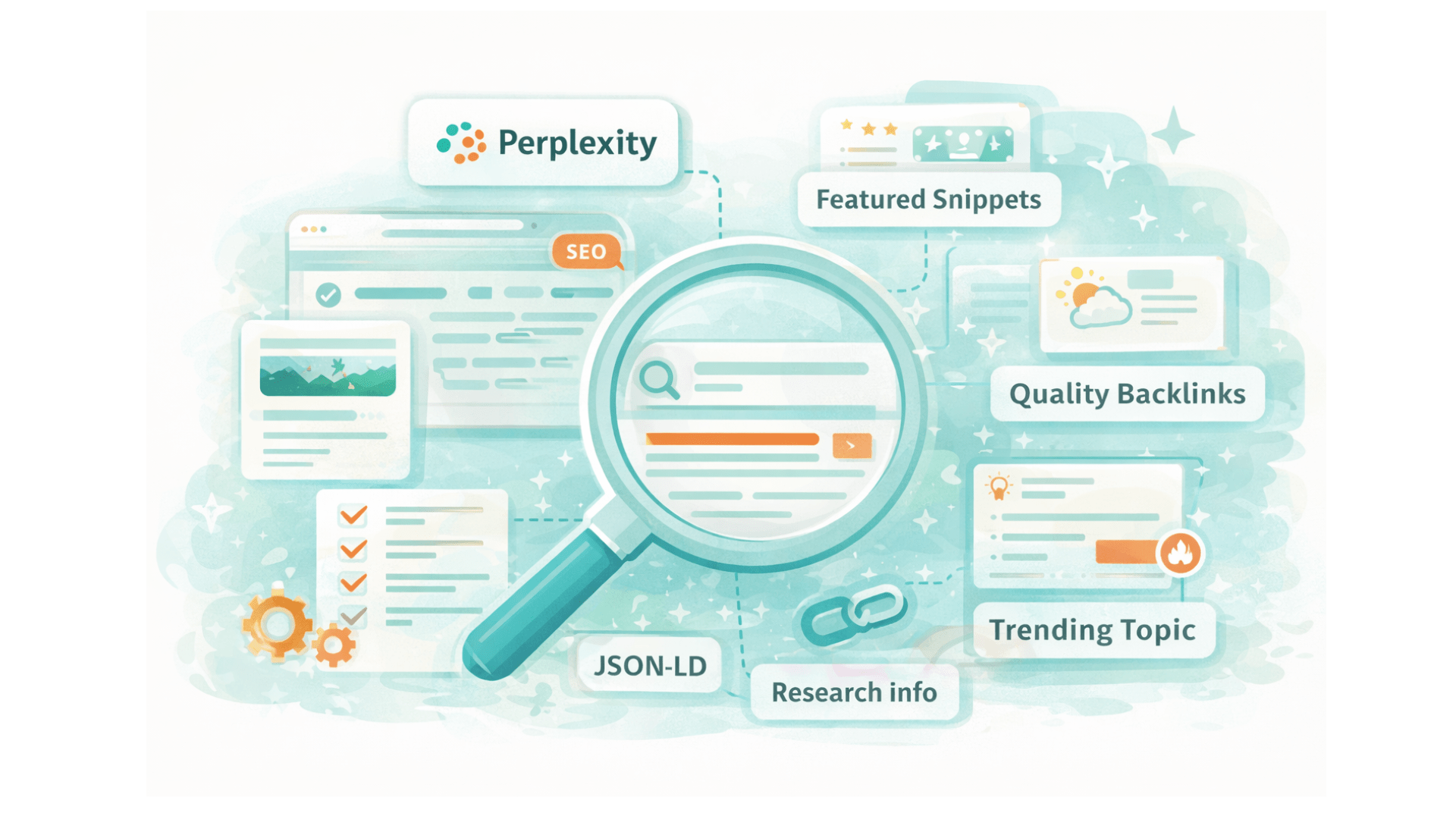
This post gives you a clear playbook for getting your content cited by Perplexity and other AI answer engines. We’ll cover how Perplexity finds and evaluates information, the signals that make content citable, and a practical checklist you can apply across product pages, knowledge bases, and thought leadership. Winning here is about authority, structure, and clarity more than old-school keyword stuffing.
Key takeaways
- Perplexity AI is an answer engine that provides direct, cited answers, shifting SEO goals from ranking to being cited.
- To earn citations you must prioritize three signals: topical authority, structural clarity, and content freshness.
- Make sure AI crawlers such as PerplexityBot are allowed in your robots.txt and that your site is crawl-friendly.
- Generative Engine Optimization (GEO) is the practical approach: make content discoverable, extractable, and trustworthy for generative models.
- Structured, answer-first content and smart external citations increase your chances of being quoted in AI-generated answers.
What is Perplexity AI and how does it find information?
Perplexity AI is an answer engine that returns concise, conversational answers to user queries with explicit source citations. It synthesizes web content in real time and shows users exactly where an answer came from.
- Perplexity uses its own web crawlers, notably PerplexityBot, alongside live web search to discover content.
- It interprets user intent, finds relevant sources, extracts the answer fragment, and synthesizes a short response with citations.
- The engine favors concise, verifiable statements it can support with links and excerpts, not long-form opinion without sources.
| Feature | Perplexity AI | Traditional Search Engine |
|---|---|---|
| Query style | Natural language, conversational | Keyword-based and query-structured |
| Result format | Single synthesized answer with citations | Ranked list of links, snippets, and SERP features |
| Source attribution | Explicit citations inside the answer | Attribution via link positions and sitelinks |
| Freshness | Strong emphasis on recency, real-time web | Uses indexed pages, may lag on very new content |
| Primary goal | Provide a verifiable, concise answer | Surface relevant pages and let user choose |
How Perplexity AI selects and ranks content
Perplexity is not trying to crown a single “best” page for a topic. It wants the most trustworthy answer fragment it can cite. Small, precise sections of a page can be more valuable than longer narratives if they are clear, factual, and attributable.
Below are the core signals Perplexity looks for when choosing sources.
Authority and trustworthiness
Perplexity prefers content from reputable, established domains with a track record of accuracy. It values signals that suggest a source is trustworthy within a topic.
- Publish original research, data, or unique reporting that others will reference.
- Use clear author bylines and short bios showing expertise and credentials.
- Earn mentions and backlinks from respected industry publications and organizations.
Clarity and structure
The engine favors content that is easy to parse and extract. Short answers and clearly labeled sections increase the chance your content is selected.
- Use obvious headings (H2, H3) and answer-first formatting under each question.
- Break content into short paragraphs, bullet lists, and numbered steps.
- Include definition boxes, tables, and clear data points that an engine can quote directly.
Freshness and recency
For topics that change quickly, Perplexity rewards recent information. Updated material often outranks older pages even when the older pages have more backlinks.
- Refresh statistics, example screenshots, and publication dates regularly.
- Prioritize updates for pages that already attract organic interest and for fast-moving topics.
- Add an update log or “last reviewed” date so the engine can see recency at a glance.
7 content strategies to get cited by Perplexity AI
Below is a practical checklist you can use as you create or rework content. Each item focuses on making your content both discoverable and easily extractable by an answer engine.
Build deep topical authority
Create clusters of content around core topics instead of isolated pages. Perplexity looks for consistent signals across a topical footprint.
- Map pillar pages and supporting articles grouped by intent and subtopics.
- Use strong internal linking to show semantic relationships between pieces.
- Publish periodic long-form overviews that consolidate the cluster and surface your best data.
Write for search intent with a Q&A format
People ask Perplexity questions in natural language. Answer them the same way on your site.
- Use question-based H2s and H3s that mirror common user queries.
- Place a short, direct answer immediately under the question, then expand with context.
- Include alternate phrasings of the question within the section to capture variations.
Use clear, machine-readable formatting
If the AI can extract text easily, it will. Formatting matters more than ever.
- Stick to H2s and H3s for sections and subpoints.
- Use ordered lists for processes and tables for comparisons.
- Add schema markup for FAQs, HowTo, and Article types to give explicit structure.
Link to credible, authoritative sources
Outbound citations are a trust signal. They show you are grounding claims in verifiable evidence.
- Cite studies, official reports, and primary sources where possible.
- Use descriptive anchor text that explains why a source was cited.
- Keep a bibliography or resource list for research-heavy pages.
Incorporate multimodal content
Perplexity can include images and videos in answers. Multimodal assets increase the ways your content can be surfaced.
- Add optimized images with descriptive filenames and alt text.
- Embed videos and include full transcripts so the engine can index spoken content.
- Use infographics that summarize a point; include the underlying data in text nearby.
Ensure technical accessibility for crawlers
If PerplexityBot cannot reach or parse your page, it cannot cite you. Technical housekeeping is essential.
- Check robots.txt to ensure PerplexityBot is not blocked and verify via server logs.
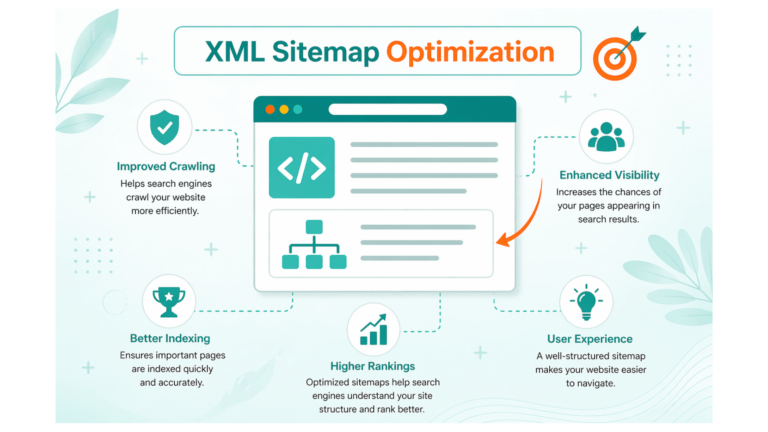
- Maintain a clean, up-to-date XML sitemap and submit it to major indexing services.
- Keep page load times low and avoid excessive client-side rendering for key answer sections.
Engage on high-authority communities like Reddit
Perplexity often cites community discussions for real-world perspectives. Presence on those platforms helps.
- Participate with valuable answers in relevant communities, not promotion.
- Where appropriate, post helpful summaries on your site so Perplexity can cite both the community discussion and your analysis.
- Monitor threads that align with your topic and rescue unanswered questions with a thoughtful write-up.
How to track your visibility in Perplexity AI
Tracking is tricky because traditional rank trackers are built for lists of links. Answer engines reward citations, not positions, so you need different metrics.
Citation frequency matters most. Track brand mentions inside answers and the prompts or queries that trigger your content. Those are the closest parallel to “rank” in an answer-first world.
Opositive.io offers AI SEO services for this challenge. We monitor when and how often your domain or pages are cited in answer engines, surface the exact fragments used, and map competitor citations so you can see where to displace them. Our analytics show which prompts your content performs for, how citation share changes over time, and which pages convert when they are surfaced.
From a hands-on angle, check your server logs weekly for PerplexityBot hits. Track spikes in referral traffic following answer visibility. Maintain a simple dashboard with metrics for citation frequency, competitor mentions, and changes in organic traffic tied to cited pages.
Common mistakes that prevent Perplexity citations
Most failures to get cited come down to a few repeatable errors.
- Blocking AI crawlers like PerplexityBot in robots.txt.
- Writing long, unstructured paragraphs without clear headings or answer snippets.
- Failing to update content, leaving statistics or examples outdated.
- Focusing only on keywords instead of answering user questions directly.
- Neglecting to build off-site authority through backlinks and brand mentions.
Generative Engine Optimization (GEO) and the future of search
Generative Engine Optimization, or GEO, is the practice of optimizing content specifically to be selected and cited by AI answer engines. GEO borrows many fundamentals from SEO, but it shifts the priority from positional ranking to extractability and verifiability.
Where traditional SEO optimizes for clicks, GEO optimizes for citations. That means crafting tight answer blocks, surfacing sourceable facts, and making refreshes visible. It also means investing in reputation signals that show an engine your content is trustworthy within a topic.
The trend toward zero-click answers is real. Being the cited source in a concise, trusted answer can drive brand lift, direct visits, and downstream conversions even when the user never clicks through. Other platforms where GEO matters include AI overviews and chat-based assistants. If your content is easy for generative systems to parse and verify, it will have persistent value across multiple AI endpoints.
Partner with Opositive.io for your AI SEO strategy
Winning in AI search takes a different playbook than classic SEO. You need content that is discoverable, extractable, and demonstrably trustworthy.
- AI visibility tracking tailored to answer engines and citation analytics.
- Content strategy for answer-first formats, Q&A structures, and topical clusters.
- Technical optimization for AI crawlers, schema markup, and site performance.
If you want to move from guessing which pages might be cited to a repeatable program that grows citation share, contact Opositive.io. We help brands map their topical authority, create extractable assets, and monitor where the market is shifting so you can be the source an AI trusts.
Conclusion
Perplexity and other answer engines change what “ranking” means. Instead of chasing positions, you need to earn citations by being clear, authoritative, and current. That means shorter answer-first sections, strong topical footprints, and technical openness to AI crawlers. Work on making your content easy to find, easy to quote, and hard to ignore. Do that, and you will show up where it counts: inside the answers people trust.
FAQs
1. What is a good Perplexity score?
Perplexity does not publish a public “score” that maps to a single number you can optimize. Success is measured by how often your domain or pages are cited for relevant queries. Track citation frequency and the quality of the prompts where you appear to judge performance.
2. What is Perplexity rank tracking tool?
There is not a single standard rank tracker for Perplexity because the engine returns cited answers rather than ranked links. Effective tracking tools monitor citation occurrences, the exact text fragments used, and competitor citation share across a set of target queries.
3. How to do SEO for Perplexity?
Focus on Generative Engine Optimization: create answer-first sections under question headings, publish authoritative, up-to-date information, use clear structure and schema, allow PerplexityBot to crawl your site, and earn credible external citations.
4. Is Perplexity an Indian search engine?
Perplexity is an AI answer engine used globally. It is not classified as a regional search engine; its service and user base span many countries.
5. Can Perplexity AI understand images and videos in my content?
Perplexity can surface multimodal results when images or videos are relevant, but the safest approach is to provide descriptive alt text, captions, and transcripts so the engine can extract the facts you want cited.
6. Does using Schema markup help in getting cited by Perplexity?
Yes. Schema helps clarify page structure and can make your content easier for an engine to parse. Implement FAQ, HowTo, and Article structured data where appropriate to improve extractability.
7. How is optimizing for Perplexity different from optimizing for Google’s AI Overviews?
Both require clean, answer-first content and strong sources, but platforms weight source types differently. Perplexity emphasizes explicit citations and community signals for some topics, while Google’s AI features may reuse Google-owned signals and indexing behavior. Treat both as GEO problems but adapt the source mix and formatting to each platform’s tendencies.
8. If my site has high domain authority on Google, will it automatically get cited on Perplexity?
Not automatically. High domain authority helps, but Perplexity also prioritizes precise, extractable answer fragments and recency. You still need targeted answer-first content, clear structure, and up-to-date facts to be selected and cited.

Mansi Jain
Senior AI SEO Specialist @ Opositive.io
GEO, AEO & LLM Optimization Specialist · 6.5+ yrs Technical SEO
About Mansi
Mansi Jain is a Senior SEO Specialist with 6.5+ years of experience in technical SEO, content strategy, ecommerce SEO, and AI-powered search optimization. At Opositive.io, she helps businesses improve their visibility across traditional search engines and emerging AI platforms through data-driven SEO strategies.
Her expertise includes technical audits, keyword research, schema implementation, content clustering, and AI SEO (GEO/AEO). Passionate about staying ahead of search trends, Mansi shares practical insights and actionable strategies that help marketers, founders, and businesses achieve sustainable organic growth.
“Practical, data-driven SEO that helps businesses grow sustainably across both traditional search and AI platforms.
Specialization
Technical SEO, Ecommerce SEO & AI SEO (GEO/AEO)
Education
B.Tech, Information Technology
College of Technology and Engineering, Udaipur · 2015 – 2019
Experience
Senior SEO Specialist, Opositive.io
3+ years at Opositive · 6.5+ years in SEO & AI-powered search
Skills
Technical audits, keyword research, schema, content clustering