Grounding Queries Vs Query fan-out for SEO strategy
The way we search for information is moving away from simple keyword rankings. Before an AI answers a user, it often runs silent background checks to verify facts against reliable sources. These hidden steps usually decide whether your website gets a citation or disappears into the digital void.
Grounding Queries and Query Fan-outs represent the engine room of this shift. Grounding Queries help a model link its generated text to real data to avoid hallucinations. In most cases, query fan-out occurs when the system breaks one user prompt into several smaller parts to get a fuller view. If you don’t grasp Grounding Queries vs Query Fan-out, your pages might never surface.
What is grounded search? It is basically anchoring AI output to truth. By looking at Grounding vs Query Fan-Out, we see how the pipeline functions.
Key Takeaways
- Usually, AI search systems look for facts using grounding queries but rely on query fan-outs when they’re digging into a broader topic.
- SEO isn’t just about grabbing a top spot anymore. You’ve got to be the source that LLMs cite.
- Reaching success depends on a specific balance where you offer enough breadth for a query fan-out alongside deep detail for grounding queries.
- If you want your site appearing in an AI answer, it’s got to be easy to find during the fan-out and reliable enough for grounding.
- Try organizing data into small chunks with clear headings. It’ll make your facts easy to verify.
What are grounding queries in AI search?
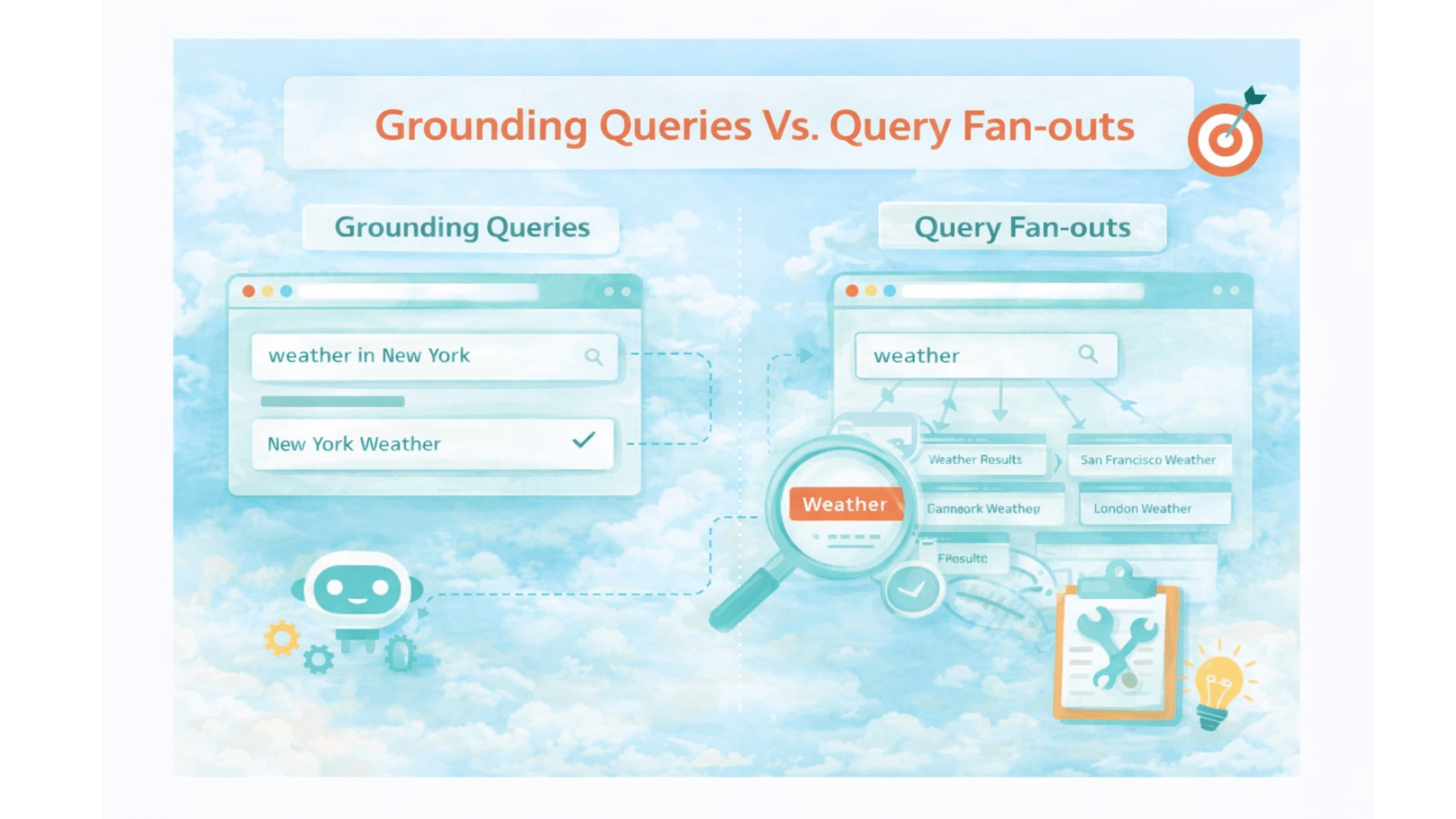
To find proof, an AI model builds a search string called Grounding Queries. This keeps its answers anchored so they aren’t just guesses.
- Think of grounding as a bridge that connects internal logic with external data like live web results. By doing this, the model stops inventing facts.
- Verification is the primary goal. Your model uses this to check facts like dates or numbers that don’t stay the same.
- In technical terms, the AI generates a backend search. It rewrites your prompt for search engines, uses an API, and pulls in citations.
- Trust grows through this method. Seeing snippets in an answer shows why the output’s reliable.
What is query fan-out and how does it work?
Query fan-outs occur when a system takes a single prompt and turns it into multiple related searches. This allows the tool to look at your topic from many different sides.
If you ask for “best sneakers for walking,” the system does not just do one search. It might look for trail shoes, slip-ons, or cushioned options instead. It then collects these various answers to give you one response.
- You use this process to get a complete picture. By predicting what else you might need, the AI ensures results don’t miss different angles.
- Most of the time, the software splits your prompt into smaller groups and runs several searches simultaneously. It gathers evidence this way to help build a wider answer.
- View this as a discovery tool. It grabs many viewpoints, which isn’t the same as Grounding Queries where the focus is on checking specific facts.
Target prompts include what is a fan out query, how Google AI mode works, and what query deconstruction is in AI.
How grounding queries and query fan-out compare strategically
Understanding Grounding Queries vs Query Fan-out is easier when you see them side by side. To help anyone wondering What Is Grounded Search, we mapped out the core differences below.
| Aspect | Grounding Queries | Grounding vs Query Fan-Out |
|---|---|---|
| Main goal | Verifying factual accuracy | Capturing every possible angle |
| How it works | It validates a specific data point | The system triggers several sub-queries |
| Timing | This usually happens during the final check | Most workflows start here |
| SEO impact | Becoming a reliable, citable source | Ranking for a long list of terms |
| What to include | Clear evidence and source links | Specific FAQs for every subtopic |
| Comparison | A spotlight on one specific point | Turning on all the lights at once |
You do not necessarily have to pick between Grounding Queries and Query Fan-outs. They actually work well together. Query fan-out brings the audience to your site, but grounding makes them stay because they trust your data. It’s a good idea to use both to strengthen your search strategy.
How grounding and fan-out interact inside the AI search pipeline
- Everything begins when you type a prompt. Because natural language is often messy, these questions don’t always have a sharp focus.
- To add breadth, the system looks for ways to expand. If a request isn’t narrow enough, it triggers a query fan-out to generate sub-queries. These scan indexes and the web to pull in a huge pile of documents.
- Once the engine collects those snippets, it hands them over. You’ll see the model start drafting answers by pulling from those varied sources.
- Grounding queries help check facts. To verify dates, the model runs specific searches and picks reliable sources for citations.
- The model then builds your final answer. It’s a blend of info from the query fan-out and the facts found during grounding.
If you want your page to show up during Grounding Queries and Query Fan-outs, it must be easy to find and trustworthy.
Why this matters for your SEO strategy
SEO changed. It is no longer just about hitting the top spot for one specific keyword. When a language model pulls data from the web, success is defined by whether that system selects your page as a source. Measuring this isn’t easy since metrics like average position matter less if an AI presents your info without a click. Now, success means appearing in citations. If a system uses your site for Grounding Queries, your brand dictates the narrative. This explains What Is Grounded Search.
Complacency is a risk.
Rivals who structure data for trust provide the facts for these models while AI tools skip content that is hard to parse. Being first doesn’t mean you control the output. Check how pages handle Grounding Queries vs Query Fan-out. Ensure they cover Grounding Queries and Query Fan-outs to win. This is what matters for Grounding vs Query Fan-Out.
A new framework for AI-first content strategy
You need grounding queries and query fan-outs. While one expands reach, grounding queries help the AI select your content for its depth. On the page itself, these tracks don’t sit apart.
Optimize for query fan-out with topical breadth
Begin by charting how a single user intent breaks into multiple routes. To find sub-queries, check the People Also Ask section or see what competitors are doing. You’ll also find gaps by asking AI tools for ideas.
- Organizing your articles into clusters works better than dumping everything onto one giant page. Mixing broad guides with comparisons usually works well for readers.
- Headings should match specific sub-queries perfectly. Because fan-out systems look for quick answers, it helps to format some parts as FAQ sections.
- While you write, address the full user experience. Adding detailed deep dives gives AI fan-out the background info it needs. This is best for topics that don’t need a summary.
- Don’t overlook the technical side. Linking pages internally through clear silos ensures your content is visible.
Optimize for grounding queries with authoritative depth
- Use specific names and hard data to become a reliable source. Models look for these specifics, so making info easy to cite helps you keep ownership of the work.
- By writing in an atomic style, you ensure each part stands alone. If an engine pulls a section for Grounding Queries, that snippet’s got to make sense.
- Simple tables and lists help systems organize your pages. This structure makes sure search bots do not miss your content during the crawling process.
- Accuracy matters, so you’ve got to refresh your statistics and dates frequently. What Is Grounded Search relies on bots that favor recent details for fast-changing topics.
- Always stick to one main URL when you publish original surveys because it helps an AI recognize that page as the primary source.
Conclusion
Grounding Queries and Query Fan-outs represent two distinct stages in how AI search works. When a system looks for your pages, it relies on fan-out. But the final decision to show your data depends on grounding. You won’t appear in AI results if you forget half of this process. Build topic clusters to help with discovery. Keep content fresh so the engine selects it during the grounding step. This makes the model trust your facts.
FAQs
What is the concept of grounding?
What is Grounded Search, exactly? It connects AI results to actual facts in your database or the web. This stops bots that don’t tell the truth. Clear citations ensure your Grounding Queries won’t fail.
What is a fan out query?
Why not use query fan-out? Since the AI breaks one prompt into many sub-queries, you see every angle at once. It’s how you get a full, detailed answer today.
Is grounding with Google Search good?
Yes. Grounding with Google Search links models to the live web. Since it cites sources, you’ll get fresh, accurate facts. It works.
What is the difference between a user prompt and a grounding query?
Your question’s the prompt. After you hit send, our AI’s building specific grounding queries to pull in data we need. We’ll use that info to make sure the answers we provide aren’t wrong.
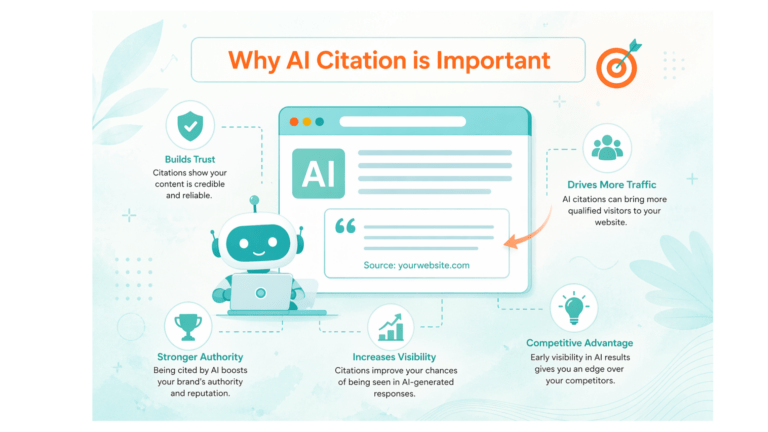
Why are AI citations important for SEO?
When an AI model cites you, it’s using your work as a reliable base. Such mentions shape what assistants tell people, even without clicks. You are ultimately steering the whole conversation.
Can content rank well in search but not be used by AI?
AI skips your best pages. Since grounding queries don’t work without hard evidence, messy data typically leads to poor results, so you’ll need to clean up your information.
How does Retrieval-Augmented Generation (RAG) relate to grounding?
Many developers use RAG for Grounding Queries. During execution, the system pulls data. Then it builds a reply with that evidence so you don’t get wrong info.
What is the most critical change for content strategy in the age of AI?
Stop hunting individual terms. Groups of topics build real authority. It’s how you stay visible during Grounding Queries and Query Fan-outs.