What is Google E-E-A-T? Guidelines and SEO Benefits
While old SEO tactics might work, they don’t hold up for long.
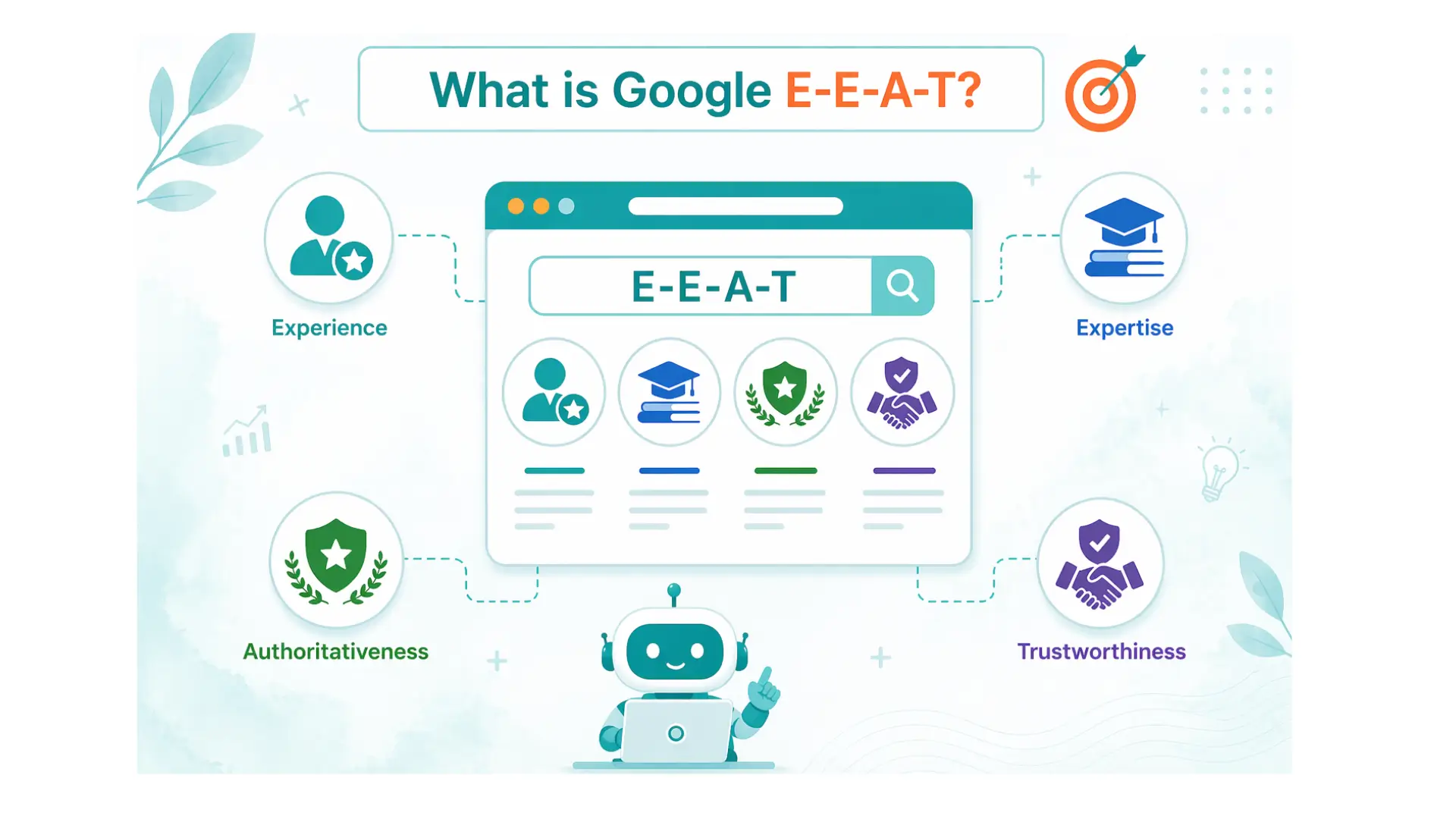
Search engines care about trust now. If you just churn out pages to chase keywords, your audience and Google won’t miss it. E-E-A-T’s how Google checks if your page is actually reliable. It stands for Experience, Expertise, Authoritativeness, and Trustworthiness. Since AI is flooding the web with generic text in 2026, proving you have real E-E-A-T helps you actually stay visible while others fade away entirely. Proving real value is the only way to build a brand that really lasts.
This guide explains E-E-A-T by breaking down each letter and providing a checklist you’ll use.
What is E-E-A-T in SEO?
Google doesn’t just guess when judging content. It relies on E-E-A-T to determine if pages are worth reading. Under this framework, the engine checks whether a writer has personal history with a topic or holds a strong reputation in their industry.
Is the page actually helpful?
Experience involves your real world history. Formal skills define expertise. Other professionals citing you as a source builds authoritativeness, but trustworthiness matters most. This specific pillar determines if a site is honest and safe for users.
You cannot track E-E-A-T the same way you track site speed. Since the extra “E” arrived in late 2022, search engines often favor creators who’ve done the work themselves over generic outputs.
Why does E-E-A-T matter for SEO in 2026?
Google prefers authority over how many keywords you cram onto a page. It is clear that the search engine wants real expertise. If you don’t use paid ads, E-E-A-T connects your knowledge to the results people see.
Why does this matter for your traffic today?
- These benchmarks help filter out false claims, which is necessary now that low quality AI pages are everywhere.
- The algorithm distinguishes your actual lived experience from repetitive machine text.
- YMYL websites will likely struggle to rank without strong scores because bad advice can cause real harm.
- Visitors tend to stick around and come back when they find a site reliable.
- Focusing on reputation instead of technical tricks helps protect your site when core updates hit.
A detailed breakdown of the four pillars of E-E-A-T
Visualize trust as the end goal. The other three pillars are basically the road you travel to get there. This breakdown looks at the EEAT seo framework to help you apply these concepts immediately.
How to demonstrate first-hand experience and knowledge
Experience relies on proof. Sounding confident is not enough. You do not get extra credit for having a loud voice, but you do get credit for proving you were on the ground.
- Handle the product yourself before writing a review and note the flaws along with the wins.
- Share your own case study data while being clear about the specific results and the path you took.
- Using original photos or short video clips makes your guides much more useful for the reader.
- Keep a troubleshooting log of specific glitches to prove you actually fixed the issue yourself.
- Write site visit reports that explain how the specific location or time of year impacted your findings.
Basic summaries are everywhere. That is why search engines like these first-hand accounts. Personal stories provide details that generic, recycled content just cannot offer. Original work earns more eyes for a reason.
How to showcase your expertise and demonstrate real knowledge
Expertise shows how deep and accurate your info goes. Maybe you have a degree. Maybe you just spent years doing the work and seeing what happens. Both matter.
These signals often show expertise:
- Tell readers about your background and specialized training in your author bio.
- Listing your professional credentials, like certificates or licenses, proves you have the skills.
- Write deep dives that explain the logic behind a topic and mention the exceptions others often miss.
- Original data sets and calculations show you have a firm grasp of the subject.
- Link to reputable sources to back up any specific numbers or study results you mention.
- Stick to industry-standard techniques since they are widely accepted and reliable.
How to build authoritativeness and become a recognized source
Authority is just another word for reputation. Why should someone listen to you instead of the next person?
Try to grow these authority signals:
- Get backlinks from other respected sites that talk about similar things.
- Your standing improves when trade journals or industry leaders mention your work.
- Use third-party platforms where people can leave visible ratings and feedback for others to see.
- Set up professional profiles and directory listings to keep a presence across the web.
- Guest spots on podcasts or interviews help people connect your name to your niche.
Good reputations aren’t built overnight. Tricks for quick links don’t work for long. If you want to be a go-to source, do work that people actually want to talk about.
How to build trustworthiness and establish genuine credibility
Trust is the glue that keeps the whole thing from falling apart. If a site looks sketchy or hides where it is located, the other pillars won’t save it.
Several common trust factors matter:
- Use HTTPS and keep security headers updated so you can keep visitors safe.
- Providing a real address or phone number shows you are reachable if a reader has a question.
- Because people want to know who is behind the screen, an About page that shares your story is a major factor.
- You need legal pages for terms of use and privacy policies on any professional site.
- Content stays current when it is updated and shows a clear date to prove it isn’t old.
- Clear transaction policies explain how billing and refunds work for your services.
Small errors can wreck your credibility. Forgetting a contact page or having an old privacy policy might make readers and bots lose faith. These details matter because they prove you are a professional.
An actionable checklist to improve your website’s E-E-A-T
You can start using these methods within a few weeks. These sections outline specific tasks to help you boost the way readers see your website right away.
Create detailed, transparent author bios
Trust is difficult to build if readers think a ghost wrote your content. Every article needs a real person who stands behind the words they put online.
Try to include these items for every writer.
- Put a clear photo of the author next to their full legal name.
- Listing their current job title or any professional certificates usually makes the audience feel more confident.
- A brief summary of their work history, including years in the industry or specific past projects, adds weight.
- Links to their social media accounts or other sites where they publish work should be included.
- Include a professional email so your readers can send in their questions.
- You should explain why this person is a dependable source for these specific topics.
Setting up a central page for each contributor is a smart move. A public archive for every writer shows a level of openness that hidden sites can’t match. It also lets anyone find their full body of work in a few clicks.
Publish original research, case studies, and reviews
Creating your own data is often the fastest way to show experience and expertise.
Original research Conduct surveys and share what you find. Even a small poll of 200 people can provide new data that other writers might want to link to.
Case studies Use real numbers to explain how your projects went. Walk through the starting problem, the steps you took, and the final results.
Reviews Write reviews only for products you have used yourself. You should include your own photos and specific data from your tests to show you aren’t just making it up.
High quality assets like these usually get links from other sites. Over time, those mentions help build your authoritativeness naturally.
Build a strong brand reputation and earn quality backlinks
Signals from other websites tell search engines whether your site is actually important.
Try these methods to help your brand standing.
- Use digital PR to share unique data or strong opinions with the news media.
- Focus on getting a few high quality links by writing guest posts for sites that already have a good reputation.
- Send your research or case studies to journalists who write about your specific niche.
- Ask your happy customers to leave reviews on other platforms and then show those notes on your own site.
- Partner with other companies to write reports that people will want to quote.
Authority often flows from established names. A single link from a site people already trust usually matters more than many links from unknown blogs.
Regularly audit and update your content
Outdated information is a risk, especially for topics like health or finance. A full check shows you where the site is getting weak.
Check these points during your review.
- Make a list of your live pages and sort them to see which ones you need to fix first.
- You should check every fact for accuracy, fix broken links, and update any old numbers.
- Add a date to the page that shows when it was last updated so readers know the info is fresh.
- Take short pages and merge them into one guide or add more detail to topics that get a lot of traffic.
- Look at your stats after you make the changes to see if they actually helped your rankings.
Do you have pages that get a lot of visitors? You might want to check those every few months, but a yearly review is typically enough for most other pages.
Make your website technically trustworthy
The technical setup of your site is the base for how visitors feel about your business.
Follow this list to handle the technical side.
- Switch the site to HTTPS and make sure your security certificates are set to stay active.
- Put your contact info in a spot where it is easy to see, like the top or bottom of every page.
- Write a clear privacy policy using simple words and make it easy to find.
- List your shipping rates and how you handle refunds clearly so customers feel safe when they buy things.
- Use schema markup to help search engines see the real people who write your content.
- Test your site speed and uptime often to make sure visitors have a good experience.
Fixing these minor issues gives people fewer reasons to doubt your brand.
Is E-E-A-T a direct ranking factor?
No, but the distinction is mostly academic. View E-E-A-T as the flavor of a finished dish instead of one specific spice.
Google doesn’t give out a secret E-E-A-T score for you to track. Software systems look at many data points to gauge experience and trust. These indicators help the algorithm decide which pages deserve top spots. While no single button exists to turn up your authority, improving the parts that Google measures works just like working on a real ranking factor.
Focus on signals you can prove. This involves things like listing your real credentials or sharing unique data from original research. When you add high quality citations, you’re sending the right signals.
How E-E-A-T handles the challenge of AI-generated content
AI allows you to churn out readable text at lightning speed. This presents a double-edged sword for your site. If you’re using software as a cheap shortcut for generic pages, your E-E-A-T score will likely suffer. This happens because the resulting text lacks real experience and often hides factual mistakes.
In the category of Experience, most automated text fails. A machine doesn’t sweat through a product test or feel the grit of a site visit.
Hallucinations are another major hurdle. Sometimes AI just makes things up or gets the source wrong. These errors kill your Expertise and Trustworthiness the moment a reader spots them. It is hard to recover that trust once it’s gone.
You should treat these tools as assistants rather than authors. Let them help you with research or outlines. But a person with real knowledge must check the facts and add original thoughts before anything goes live.
| Feature | Human-Led Content | Pure AI Content |
|---|---|---|
| Experience | High, includes first-hand accounts, photos, or original testing | Low, usually lacks first-hand details or original media |
| Expertise | Clear author credentials, nuanced explanations, error correction | Variable, can appear knowledgeable but may include inaccuracies |
| Authoritativeness | More likely to attract citations, mentions, and backlinks | Less likely to be cited by reputable sources unless edited and sourced |
| Trustworthiness | Transparent authorship, policies, and corrections process | Risk of hallucinations, opaque authorship, and rapid scale-driven errors |
Conclusion
Google doesn’t see E-E-A-T as a passing phase. This framework stays at the center of modern search quality.
Because AI floods the web with generic fluff, you win by focusing on things bots can’t copy. Lean on your hands-on experience and clear expertise. Reputation and open technical details matter too. Showing that a person wrote your people-first content is the way to get lasting SEO results in 2026.
It’s better than models that only guess. That brings engagement. Search systems will respect your brand.
FAQs
1. What is the difference between “eat” and “eeat”?
Imagine E-A-T as a tripod made of expertise, authority, and trust. When you look at E-E-A-T, a fresh “E” for experience sits right at the start. This shift puts a spotlight on how much you have actually done what you are writing about in your posts. Focusing on this helps your work stand out from the pile of generic summaries that fill the web today.
2. Is E-E-A-T still relevant?
It is. This framework stays at the heart of how Google judges quality, especially for topics involving money or health. Since the internet is currently drowning in AI-generated text, showing that you have actual experience and clear credentials matters more than ever. You need these signals if you want to keep your rankings stable. You cannot simply ignore these factors and expect to stay on the first page.
3. What is the E-E-A-T update?
Around the end of 2022, a big shift occurred when Google added experience to the original E-A-T model. This change sent a clear message that search systems should favor people with first-hand knowledge. It fundamentally changes how your content is measured for quality.
4. How does E-E-A-T apply to a new website with no established authority?
For a brand-new site, you can start building a reputation by putting out original work and making your author biographies transparent. It is also smart to gather reviews from third parties or work with established names for guest posts. Concentrating on one specific niche helps you gain traction faster than trying to cover everything at once. This approach builds the trust you need to grow over time.
5. Can good E-E-A-T protect a site from penalties during Google core updates?
Strong signals do not give you an absolute guarantee that you will never see a dip in traffic. Still, they help your site stay strong. If the site has solid credentials and accurate facts, you are less likely to lose your spot when a core update rolls out. Sites that try to use sneaky tricks often find their traffic disappearing overnight.
6. What are the most important E-E-A-T signals for a YMYL website?
The most important signals usually include things like verified credentials for your writers and reviews from people who are recognized as experts. You also need clear disclosures about your business, information that stays up to date, and citations that point to reputable organizations. These factors show that the content is well-sourced and safe for your readers to trust. They give real proof of your quality.
7. How long does it take to see SEO improvements after implementing E-E-A-T best practices?
You will likely see people engaging more with your pages within a few weeks. But ranking gains usually take three to six months before they show up. This happens because your reputation needs to grow while you earn more backlinks.
8. Can user-generated content like customer reviews improve a site’s E-E-A-T?
Actual reviews from customers give you social proof and show real experience, which helps your scores for trust. You should make sure these reviews are easy for visitors to find and verified whenever possible. Putting them directly onto your service pages makes a real difference in how people view your site. This helps show that you are a real business with a history of helping people.